
60 Day 500 - Hour Hatha, Ashtanga - Vinyasa Yoga Teacher Training in Rishikesh, India

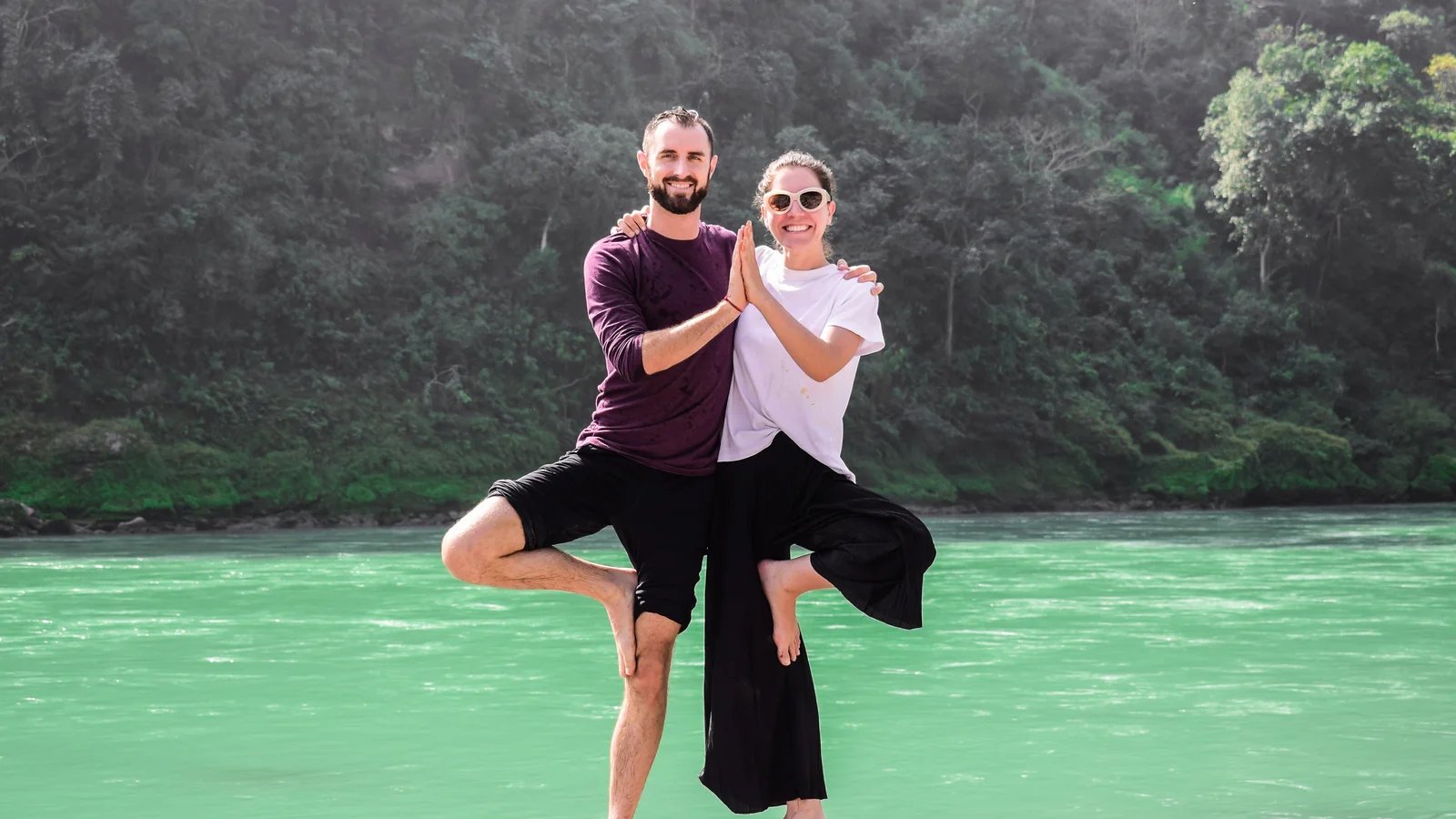
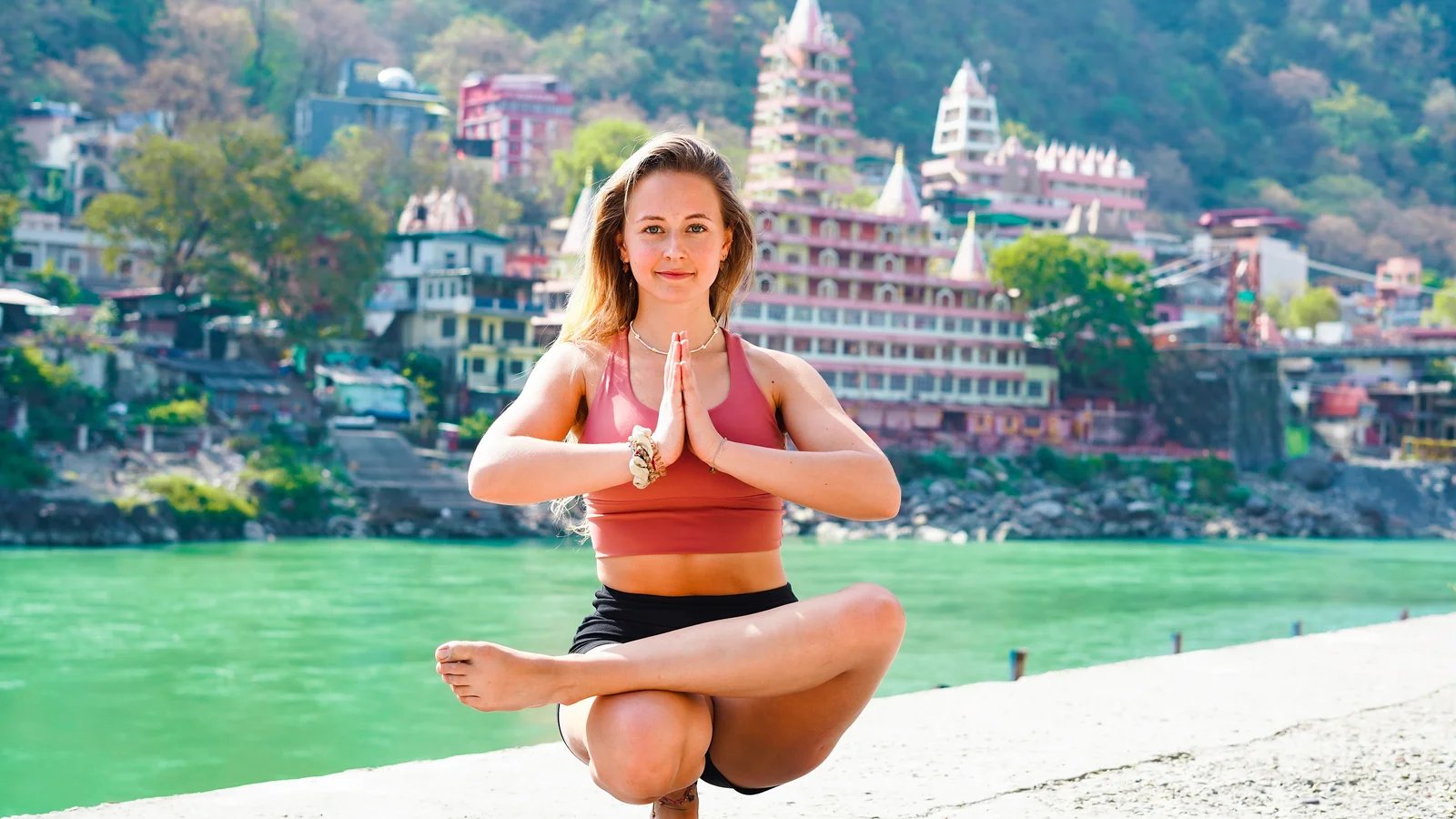
"Authentic 60-Day Yoga Experience in Rishikesh"
Program Overview
Authentic 60-day yoga teacher training experience in Rishikesh with Rishikesh Yogkulam.
Meet the instructors
Highlights
- Get access to 11-course books in PDF format prior to the training
- Eligible to register with Yoga Alliance upon completion
- Free sound healing / kirtan session
- One special session of Ayurveda massage
- Daily fresh and healthy organic vegetarian / vegan / gluten-free meals
- Free airport pick-up from DED Airport to Rishikesh Yogkulam
- 59 nights accommodation
- Outdoor excursions
At a glance
Yoga styles
Check-in Time
10:00
Check-out Time
12:00
Facilities
Shopping
Air-conditioned rooms
Café
Dining area
Kitchen
Lobby
Restaurant
- Smoke-free property
- Yoga shala
- Yoga studio
- ATM / banking
- Convenience / grocery store
- Currency exchange
- Dry cleaning
- Free parking
- Free Wi-Fi
- Internet access
- Ironing / ironing board
Laundry
Library
- Medical assistance
- Wireless internet
During the course, you will be staying at Rishikesh Yogkulam. The school has yoga hall, a dining area, a reception and a wonderful area surrounded by mountains. Rishikesh Yogkulam offers single and double rooms based on the student’s requirements.
Every room has an attached bathroom with a western toilet and hot shower and a balcony with a mountain view(subjective). The rooms for the yogis are well-maintained and clean. They offer bed sheets, pillows, bath towels, toilet paper, a blanket, and welcome amenities upon arrival. Good Wi-Fi is included on every floor. Water and laundry service are also available.
The location of Rishikesh Yogkulam is incredibly central, offering the utmost convenience. All the necessary amenities like an organic store, ATM, bike rentals, and renowned cafes are in close proximity. Moreover, they are just a 5-minute walk away from the hanging bridge and the sacred River Ganga, allowing easy access to their spiritual essence and tranquility.
Certifications
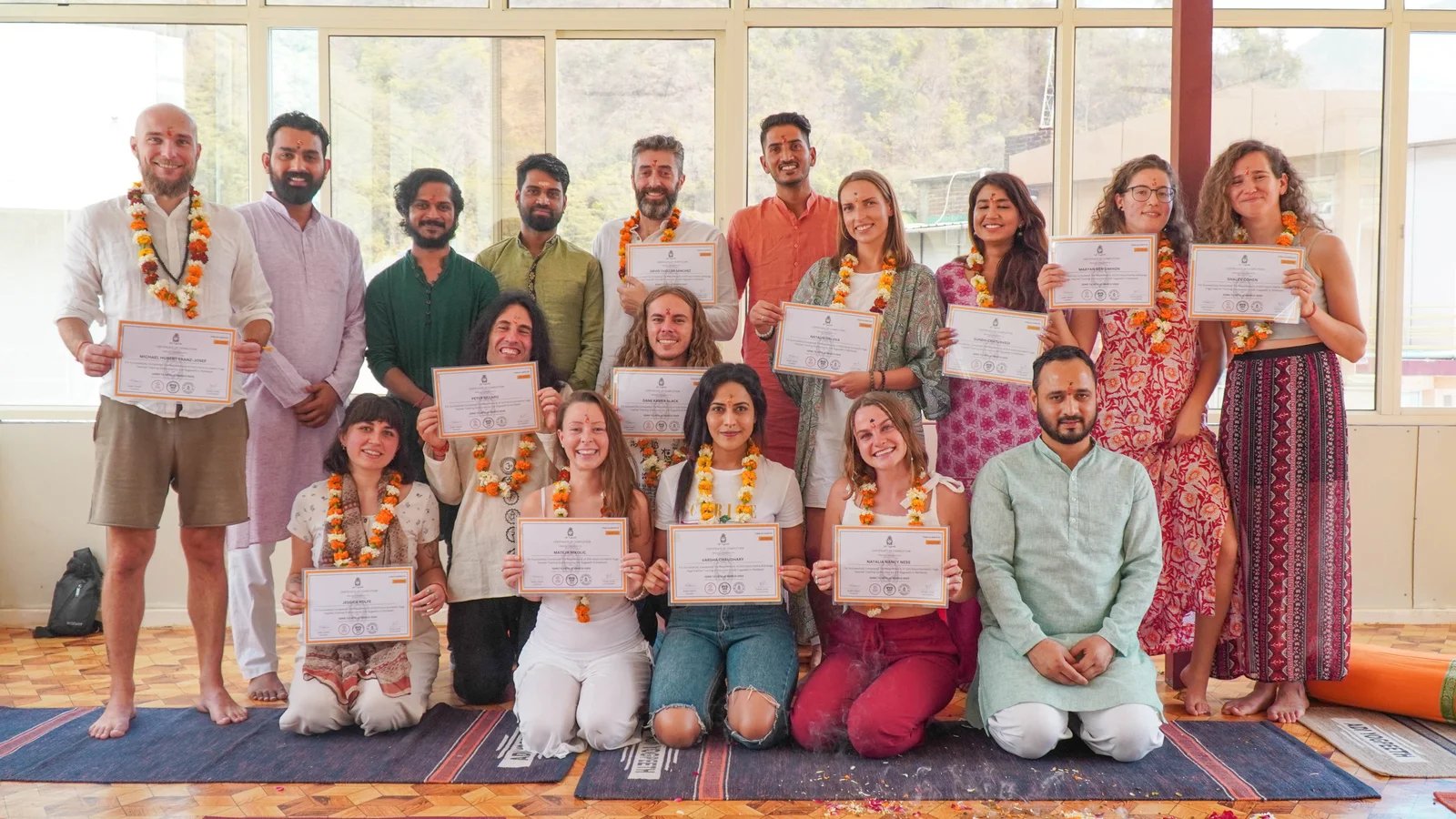
Students who complete their training are eligible to register with Yoga Alliance as Registered Yoga Teachers (RYT®).
Rishikesh Yogkulam’s main focus is to have a small and intimate class setting for individualized and personalized attention from teachers, as well as creating an open atmosphere and special bond between the students, teachers, and Rishikesh Yogkulam’s team.
The course is for all yogis and yoginis who aspire to take their yoga practice to the next level. It is a two-months-long foundational program wherein we teach the students about the multiple aspects of yoga.
This program is not suitable for severe mental/physical health conditions and thus you’re advised to not take this training as a substitute of medical therapies and alternative healing therapies
The training comprises of practical and theoretical classes for yoga poses, breath control, and meditation. This 500-hour yoga teacher training is not just another yoga course but a spiritual journey to explore your own strengths. During this journey, your proficient yoga teachers will guide you to discover your mental and physical capabilities as a yogi.
1. Recitation of sacred sound (mantra chanting)
The purpose of mantra chanting in yoga is to generate vibrations and connect with the universe. Each mantra is special and rich with spiritual energy.
- 1. Om Asato Maa Sadgamaya (Mantra from Upanishad)
- 2. Tvameva mata ca pita Tvameva (Sloka on gods)
- 3. Om Tryambakam Yajamahe (Mantra on lord shiva)
- 4. Om Sahana vavatu (Mantra from Upanishad)
- 5. Guru Brahma Guru Vishnu Gurudevo Maheshwari (Guru stotram)
- 6. Yogena Cittasya (Sloka on sage Patanjali)
- 7. Hare Rama, Hare Krishna (Maha mantra)
- 8. Vakratunda Mahakaya mantra
- 9. Om Bhur Bhuva Swaha (Gayatri mantra)
- 2. Yoga postures (asana)
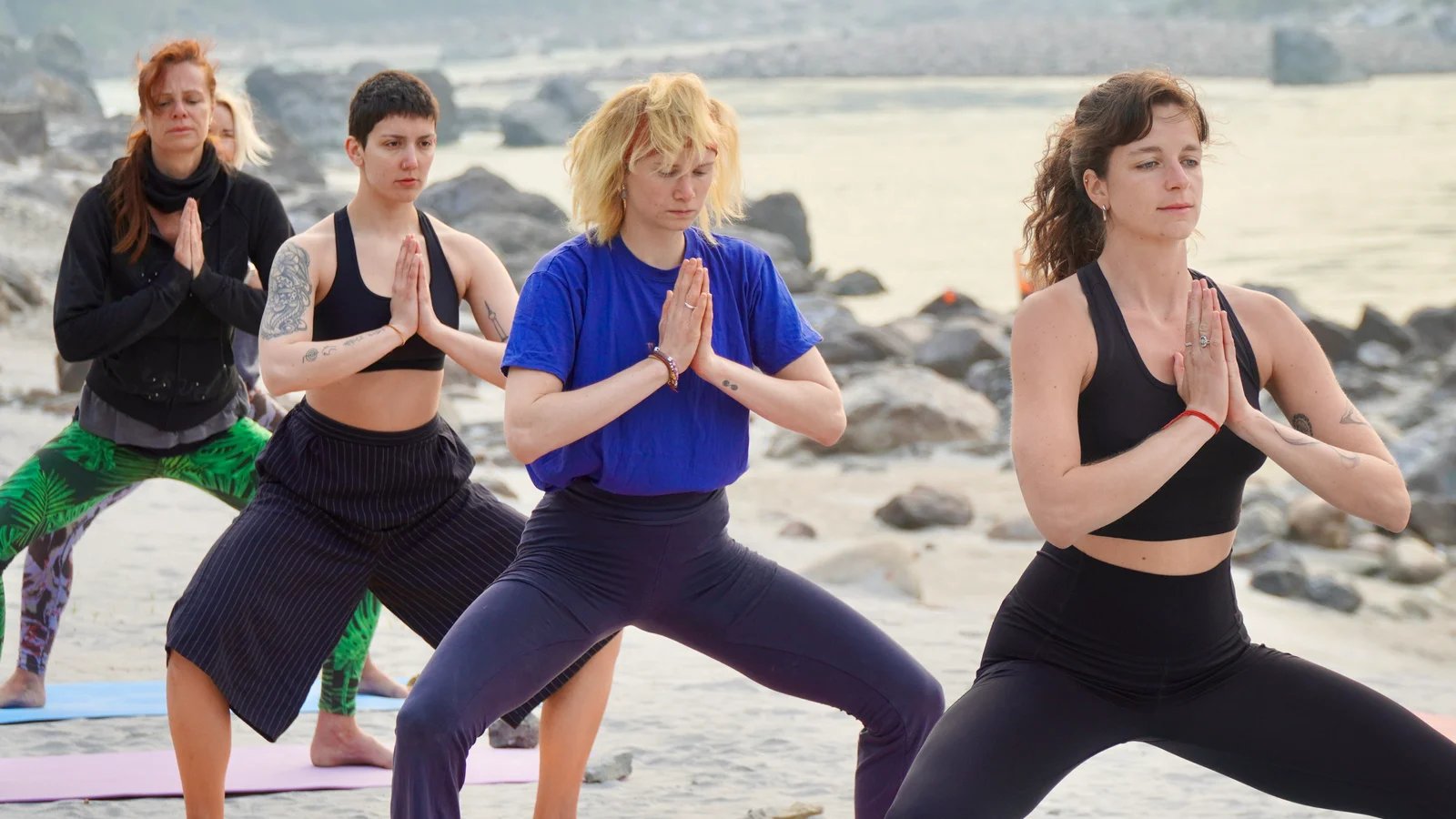
Students will gain extensive knowledge of yoga postures and will increase their strength, flexibility, and discipline.
- Ashtanga Vinyasa yoga course syllabus
- 1. Sun salutation A
- 2. Sun salutation B
- I Padangusthasana - big teo posture
- II Padahastasana - hand under foot posture
- III Utthita trikonasana - triangle pose
- IV Parivrtta Trikonasana - revolving triangle
- V Utthita parvakonasana - extended side angle pose
- VI Parivritta Parsvakonasana - revolving side angle pose
- VII Prasarita padottanasana A to D - intense wide leg stretch
- VIII Parsvottanasana - intense side stretch posture
- IX Utthita hasta padangusthasana - hand to big toe posture
- X Ardha Baddha Padmottanasana - half bound lotus forward bend
- XI Utkatasana - fierce pose
- XII Virabhadrasana A-B warrior
- Sitting postures
- XIII Dandasana - staff pose
- XIV Paschimottanasana A to C intense west - stretch or sitting forward bend
- The Vinyasa (Vinyasa to jump back)
- XV Purvottanasana - intense east stretch
- XVI Ardha baddha Padma paschimottanasana - half bound lotus forward bend
XVII Tiriang mukhaipada paschimottanasana - reverse the leg direction of one leg intense east stretch
- XVIII Janu sirsasana A to C head to knee pose
- XIX Marichyasana A - D
- XX Navasana - boat posture
- XXI Bhujapidasana - shoulder pressure posture
- XXII Kurmasana - tortoise posture
- XXIII Supta kurmasana - sleeping tortoise
- XXIV Garbha pindasana - embryo posture
- XXV Kukkutasana - rooster posture
- XXVI Baddha konasana A to B - bound angle posture
- XXVII Upavista konasana A to B - seated angle posture
- XXVIII Supta konasana A to B - lying down angle posture
- XXIX Supta padangustasana - reclining big toe posture
- XXX Ubhaya padangusthasana - both big toes postures
- XXXI Urdhva mukha paschimottasana - upward facing full forward bend
- XXXII Setu bandhasana - bridge
- XXXIII Urdhva dhanurasana - upward bow posture
- XXXIV Paschimottanasana - full forward bend
- XXXV Salamba sarvangasana - shoulder-stand
- XXXVI Halasana - plow
- XXXVII Karnapidasana - ear pressure posture
- XXXVIII Urdhva padmasana - upward lotus
- XXXIX Pindasana - embryo posture
- XL Matsyasana - fish posture
- XLI Uttana Padasana - extended leg posture
- XLII Sirsasana - headstand
- XLIII Yoga mudra - sealed yoga posture
- XLIV Padmasana - lotus
- XLV Uttpluthi - uprooting
- XLVI Savasana - corpse posture
- Hatha yoga course syllabus
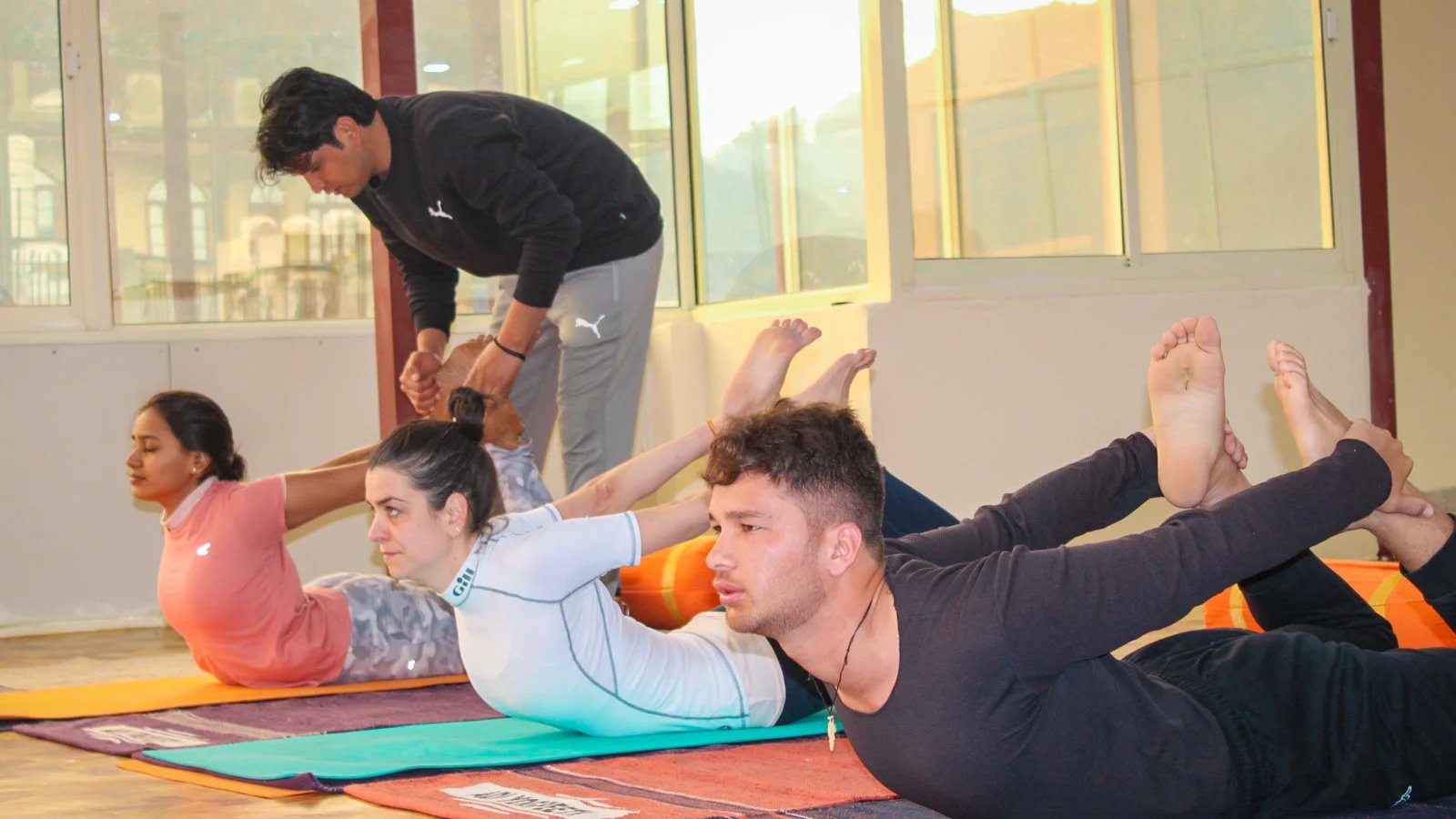
- Alignment, assist, and adjustment
- Surya namaskar (sun salutation)
- Chandra namaskar (moon salutation)
- 1. Bharadvajasana
- 2. Lolasana - swinging pose
- 3. Kukkutasana - rooster pose
- 4. Sarpasana - snake pose
- 5. Shalabhasana - locust pose
- 6. Dhanurasana - bow pose
- 7. Paschimottanasana - seated forward bend
- 8. Janu sirshasana - head to knee pose
- 9. Parivirta janu sirshasana - revolving head to knee pose
- 10. Sarvangasana - shoulder stand
- 11. Padam sarvangasana - shoulder stand lotus pose
- 12. Sirshasana - headstand
- 13. Natarajasana - lord shiva’s pose
- 14. Utthita hasta padangusthasana
- 15. Naukasana - boat pose
- 16. Vatayanasana - horse face pose
- 17. Mayurasana - peacock pose
- 18. Koormasana - tortoise pose
- 19. Chakrasana - wheel pose
- 20. Hanumanasana - monkey pose
- 21. Agnistambhasana - fire log pose
- 22. Brahmacharyasana - celibate’s pose
- 23. Astavakrasana - eight-twists pose
- 24. Ek pada sirasana - one foot to head pose
- 25. Chaturanga Dandasana
- 26.Pincha Mayurasana - feathered peacock pose
- 27. Eka Pada Koundinyasana - sage koundinyasana
- 28. Handstand - Adho Mukha Vrksasana
- 29. Ardha Pincha Mayurasana - dolphin pose
- 30. Makara Adho Mukha Svanasana - dolphin plank pose
- 31.Bakasana - crow pose
- 32. Ek pada bakasana - one leg crow
- 33. Utthan Pristhasana - lizard pose
- 34. Pashasana - noose pose
- 35. Parivrtta Surya Yantrasana - sundial or compass pose
- 36. Titibasana - fire fly pose
- 37. Parshva bakasana - side crow
- 3. Pranayama (breathing practices)
- 1. Introduction of pranayama
- 2. The pranic body
a. Annamaya kosha
b. Manomaya kosha
c. Pranamaya kosha
d. Vijnanamaya kosha
e. Anandamaya kosha
- 3. Natural breathing
- 4. Abdominal breathing
- 5. Thoracic breathing
- 6. Clavicular breathing
- 7. Yogic breathing
- 8. Nadi shodhana pranayama and its techniques
- 9. Sheetali pranayama and its techniques
- 10. Sheetkari pranayama
- 11. Bhramari pranayama
- 12. Ujjayi pranayama
- 13. Bhastika pranayama
- 14. Kapalbhati pranayama
- 15. Moorchha pranayama
- 16. Surya Bheda pranayama
- 17. Chandra bhedana pranayama
- 18. Swana pranayama
- 4. Mudra (yoga gestures)
The practice of Mudra hand gestures is an ancient facet of yoga. Performing gestures effects the energy flow of the body and can change a person's spiritual and mental characteristics.
- 1. Introduction of mudras
- 2. Jnana and chin mudra
- 3. Yoni mudra
- 4. Bhairava mudra
- 5. Hridaya mudra
- 6. Khechari mudra
- 7. Nasikagra mudra
- 8. Shambhavi mudra
- 5. Bandhas (energy lock)
The practice of Bandhas expands the lung capacity and breathing capabilities during yoga. It also strengthens the entire body from the inside out.
- 1. Introduction to bandha
- 2. Jalandhara bandha
- 3. Moola bandha
- 4. Uddiyana bandha
- 5. Maha bandha
- 6. Meditation (Dhyana)
Meditation is a systematic practice that promotes physical, mental, and emotional tranquility with the purpose of reaching Samadhi (self-realization).
Introduction to meditation.
- Meditation, why?
- Meditation and brain waves
- Meditation and its effect on stress management obstacles in meditation
- Role of concentration in meditation and tips for developing concentration
- Meditation on body and breath
- Om or mantra meditation
- Antat and Bahir Trataka
- Dynamic meditation tips for the silence meditation practice
- Japa meditation
- Ajapa japa
- Antar mouna
- Nada meditation
- 7. Yoga Nidra (psychic sleep)
When a yoga practitioner moves through the various internal states of Yoga Nidra, a profound experience of relaxation occurs. This is called 'Turiya', a sensation of pure bliss.
- Basic relaxation
- Tension relaxation
- Full body relaxation
- 8. Yoga cleansing (Shatkarma)
Yogic cleansing exercises are important to learn how to incorporate your breath and meditate properly during physical aspects of yoga. It also removes the blockages in the energy channels.
- Jalaneti Satkarma (Nasal cleansing with salty water)
- Rubber neti (Nasal cleansing with a rubber string)
- Agnisar Kriya Nauli Kriya Kapalbhati cleansing
- 9. Anatomy and physiology (Sharir Vijnan)
Proper understanding of the physical body will help to prevent injury before, during, and after practice. There are two kinds of yoga anatomy: physical and spiritual. Understanding both types is needed.
- Digestive system
- Respiratory system
- Circulatory system
- Nervous system
- Endocrine system
- Organs bodily systems
- Detailed study
- Effects of pranayama in the respiratory system
- Effects of yoga practice and Nauli in the digestive system
- Muscular and skeletal system with advanced postures
- Anatomy of Pelvic griddle and spine
- Nadis - the energy channel
- Prana and nervous system
Kundalini
Shakti
Chakra
Panchakosha
- Therapeutic applications of yoga postures and how to avoid injury in asana class
- 10. Yoga philosophy (Yoga Darshana)
Yoga philosophy is the foundation of your yoga practice and is the key to earn yogic strength. Through the path of Vedanta Philosophy, you will establish a solid, well-rounded yoga practice.
- Patanjali yoga sutras
- 1. Chapter one - Samadhi pada
- 2. Chapter two - Sadhana pada
- 11. Yoga therapy
Incorporating therapeutic yoga practices helps to address various physical, mental, and emotional disorders. Students will learn techniques for combatting these issues through yoga.
Shathkarma
- Therapeutical effects of Shathkarma
- Kati Vasti
- Tridosha (explanation of Tridosha)
- Food habits as per Tridosha
- Nadi Parikshan
Diabetes
Hypertension
- Respiratory diseases - diseases related to respiration
- Yog Nidra
- Pranayam and its effects
- Eyes diseases
- Heart diseases
- Heart opening session
- Video session on awakening of Kundalini
- 12. Teaching practice (Adhyapanam)
Students will take turns practicing their teaching skills by performing in front of their peers and teachers.
Demonstration
Alignment
Instructions
13. Teaching methodology
A yoga teacher should efficiently perform the practical applications of class planning and preparation. At Rishikesh Yogkulam School, their students will learn how to create a positive and peaceful class environment for an enjoyable and transformative experience.
- 1. Positive and conscious communication
- 2. Friendship and trust
- 3. Time management
- 4. Qualities of a teacher
- 5. Principles of demonstrating, observation, assisting, correcting
- 6. Use of voice in class
- 7. Mental and emotional preparation for teaching
- 8. Class preparation
- 9. Step by step class structure planning
- Sample of daily schedule (subject to change)
- 05:30 Morning bell
| 05:30–06:00 | Cleansing or chanting |
| 06:00–07:30 | Hatha yoga |
| 07:45–08:45 | Pranayama |
| 08:45–09:45 | Breakfast |
| 10:00–11:00 | Yoga philosophy |
| 11:15–12:15 | Alignment and adjustment |
| 12:30–13:30 | Yoga teaching methodology |
| 13:30–14:30 | Lunch |
| 14:30–15:30 | Self-study or rest |
| 15:30–16:30 | Yoga anatomy and physiology |
| 16:45–18:15 | Ashtanga Vinyasa |
| 18:30–19:30 | Meditation |
| 19:30–20:30 | Dinner |
21:00 Lights off
Please note that there is a one-week break between the 200-hour and 300-hour portion of the program. During this time, seven nights accommodation is included but no food is provided.
During this course, you will be enjoying a different trip or extra-curricular activity, on each day, as below:
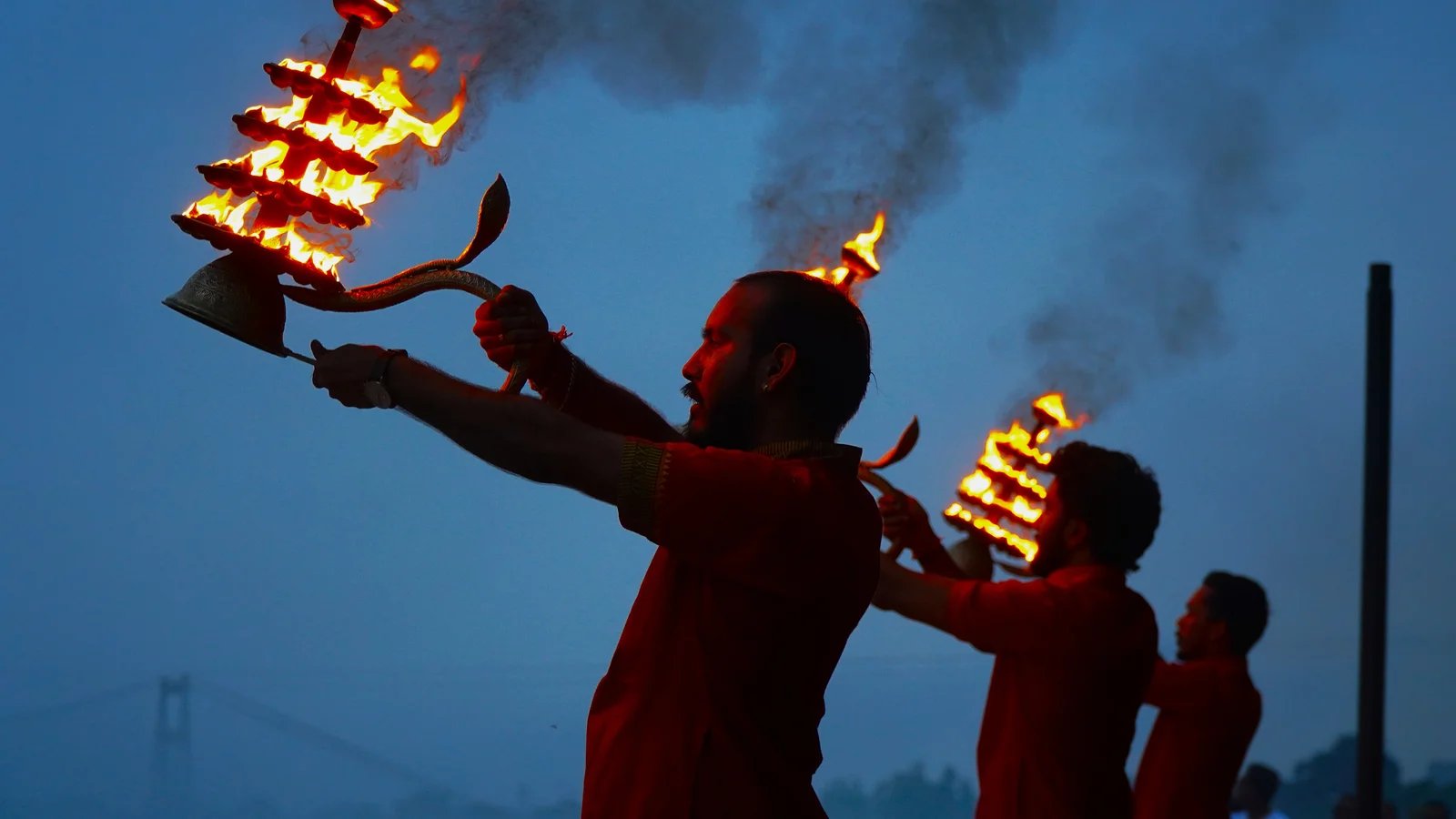
- Famous Parthmarth Niketan Aarti
- White river rafting
- Himalayan tour
- Local market tour in Rishikesh
- Waterfall trekking
- Sightseeing of the famous ghats (river sides)
- Excursion are organized on Sundays and they are subject to weather
This Yoga Retreat is vegetarian-friendly
Cleansing and wholesome nutrition for your practiceDaily freshly made vegetarian meals are included in the price. The food is fully prepared hygienically, and the vegetables are organic. Rishikesh Yogkulam food is well known all around the world for its taste and verities. When diet is wrong, medicine is of no use. When diet is correct, medicine is of no need - Ayurvedic proverb. Many people wonder if it is enough just to practice yoga. In itself, practicing yoga is not just a healthy life but at Rishikesh Yogkulam, they believe that it is also a way of living. But when complemented with healthy food habits, it can really create wonders.
In fact, eating the right food is an essential part of living a yogic life. What you eat not only influences your physical well being but also your emotions and thoughts. Yoga does not dissect food into proteins, carbohydrates or fats; instead, it classifies them according to the effect they have on the body and mind into three types: Satva, Rajas, and Tamas. Tamasic food is the kind of food that makes you lethargic or sluggish, while Rajasic food is that which brings about activity or restlessness. Whereas Sattvic food is the kind that makes you feel light, energetic, and enthusiastic.
Sattvic foods are those which purify the body and calm the mind. They stimulate the body and mind into action. Cooked food that is consumed within three to four hours can be considered Sattvic. Menus at the center are created by their master chef, Sandeep Semwal who has worked with some of the best five-star hotels around the world and carries great knowledge about the Sattvic diet. Along with this, he focuses on hygiene practices at the institution to ensure the food is safe and carries great nutritional values, which is much needed for a healthy life.
Not just the right kind of food is important; it is vital to eat the proper quantity of food at the right time. Overindulging leads to lethargy, while under eating will not provide enough nourishment. Most of the time you know that your stomach is full but tempted by the taste buds, you tend to indulge. The right amount of food cannot be quantified into cups or grams. When you listen to your body attentively, you will know when exactly to stop. You might eat the right kind of food in the right quantity but if you are irregular with your timings, then the whole system goes for a toss and the natural rhythm of the body is hampered.
Therefore, it is of prime importance to eat food at the same time every day and eat it at regular intervals. It is said that the state of the mind of the person cooking or eating also affects the food. The energy in the food cooked by someone while he or she was angry will definitely be lower than that of someone who cooked it with a feeling of love, contentment, and gratitude. Listening to some soothing music or chanting while cooking and eating can help retain the prana (life force energy) in the food. It is definitely worthwhile to pay some attention to the food that you eat, as the ancient Indian texts say that you are what you eat.
Note
In line with the yogic philosophy of respecting everyone's life, Rishikesh Yogkulam follow a lacto-vegetarian diet. They do also take care of dietary requirements such as dairy-free, gluten-free, vegan.
Remember to let Rishikesh Yogkulam know before your arrival, if you follow a special diet or have a different allergy/intolerance then those mentioned above kindly let them know prior to your booking so they can check the possibility with the kitchen staff.
Rishikesh Yogkulam cannot cater for celiac disease or strong gluten allergy due to possible gluten contamination.
Rishikesh Yogkulam cannot guarantee no contamination for food.
On Sundays, no food will be served and you can enjoy the meals in the cozy cafes nearby with beautiful Ganga view.
The following meals are included
Breakfast
Lunch
Dinner
Drinks
The following drinks are included
Water
Tea
The following dietary requirement(s) are served and/or catered for:
Vegetarian
Vegan
Gluten Free
Organic
Lactose Free
Ayurvedic
If you have special dietary requirements it's a good idea to communicate it to the organiser when making a reservation
The following meals are included:
- Breakfast
- Lunch
- Dinner
- Drinks
The following dietary requirement(s) are served and/or catered for:
- Vegetarian
- Vegan
- Organic
- Yogic
If you have special dietary requirements it's a good idea to communicate it to the organizer when making a reservation.
Outlined below are a selection of remarkable activities to engage in while in Rishikesh. Please note that these activities are not included in the package; however, Rishikesh Yogkulam can make the arrangement upon request.
- Ayurveda doctor consultation
- Ayurvedic massage and therapies
- Panchakarma treatment
- Sound healing sessions & course Level 1, 2, Master
- Reiki sessions & course Level 1, 2, Master
- Astrology consultation with birth chart reading
Acupuncture
- Face reading
- Physiotherapy session
- All activities as per the schedule
- Special focus on yoga teaching methodologies
- Indian cooking class (organised only during monsoon season)
- Free sound healing session & kirtan
- Shatkarma (yogic cleansing practice)
- Special functional anatomy classes
- Chakra-based classes
- Daily mantra chanting, meditation, asana, anatomy, and yoga philosophy
- Practice teaching, learn how to sequence your first yoga class, and use teaching tools
- Free airport pick-up from DED Airport to Rishikesh Yogkulam
- Free online preparatory course subscription
- Eligible to register with Yoga Alliance upon completion
- 53 days of practice
- Daily healthy breakfast, lunch, and dinner
- Outdoor excursions that include some of the caves, temples, waterfalls, or local mountain villages
- 59 nights accommodation
- 3 organic delicious meals per day, plus morning herbal tea
- Use of campus facilities such as free Wi-Fi
- Course materials
- Certificate of completion to register with Yoga Alliance
- One special session of Ayurveda massage
- AC / heater - available for an additional cost
- Food in the free week between the end of the 200 hours and the beginning of the 300 hours, from the 24th to the end of the month (no teachings during the free week)
- Ayurveda doctor consultation
- Ayurvedic massage and therapies
- Sound healing course levels 1, 2, Master
- Reiki course levels 1, 2, Master
- Astrology consultation (Vedic birth chart reading)
- Meals on Sunday
Beautiful and serene location in Rishikesh, carefully chosen to provide the perfect setting for your yoga journey.
Recommended Airports
Arrival by airplane
Please book your flight to arrive at Indira Gandhi International Airport (DEL) where you can take a domestic flight to Jolly Grant Airport (DED). Upon your arrival, there is a complimentary taxi waiting for you, which will bring you from the airport to the yoga school at Laxman Jhula.
Arrival by bus
From Indira Gandhi International Airport (DEL), you can get a taxi to bring you to Delhi ISBT bus station. From there, you can find many governments and private means of transportation to bring you to Rishikesh. Once you arrive at Rishikesh bus station, your complimentary pick up will be waiting for you to bring you to the yoga school at Laxman Jhula.
Arrival by train
The nearest railway station is the Haridwar train station. From there, you will find many buses, taxis, and other transportation services that will bring you to Rishikesh. If you want Rishikesh Yogkulam to help you arrange transportation from Haridwar, kindly let them know.
Airport transfer included:
Jolly Grant Airport
No additional charges. You can request this in the next step.
Additional charges may apply. You can request this in the next step.
A reservation requires a deposit of 20% of the total price. The deposit is non-refundable, if the booking is cancelled. The rest of the payment should be paid on arrival.
- A reservation requires a deposit of 15% of the total price.
- The deposit is non-refundable, if the booking is cancelled.
- The rest of the payment should be paid on arrival.
Guest reviews
No reviews yet — be the first to share your experience.
Similar Retreats You Might Love
Explore other transformative experiences in India
3-Day Yoga and Meditation Retreat in Rishikesh, India
7 Day Riverside Yoga Retreat in Rishikesh with Daily Meditation & Ayurveda

5 Day Riverside Yoga Retreat in Rishikesh with Daily Meditation
